Practical judgement for working professionals
Make difficult decisions with clearer judgement.
For professionals and managers facing incomplete information, competing priorities, or disagreement.
I’m Jason Conley, an intelligence analyst and author with more than three decades of experience in analysis and decision support. I bring Stoic discipline and strategic thinking to the decisions you face at work.
Free printable brief and completed workplace example. Email subscription is optional.
U.S. Air Force intelligence experience · Analyst, instructor, team leader, and planner · Author of The Stoic Strategist
A decision in practice · Fictional case
The team is full.
The request still arrives.
Maya needs to recommend whether her team can take on a new request. Saying yes would leave the workload unresolved. Saying no would leave the tradeoff unexplained.
Estimates for the week: 64 hours of existing commitments plus a new 20-hour request.
Make the conditions visible.
Moving an existing report could reduce this week's estimated demand to 60 hours, including the new request. That gives Maya an option to examine.
She still needs to check who depends on the report, whether next week has capacity, and whether her director approves the change.
A conditional recommendation
Accept the request if the report can move without disrupting its users, next week's capacity is confirmed, and the director approves the revised priorities.
The recommendation names the tradeoff and the checks that must happen before commitment. The case demonstrates a process, not a promised outcome.
The person behind the method

Jason Conley
Intelligence analyst, instructor, and author.
Three decades of decisions under uncertainty.
My U.S. Air Force service included intelligence analysis, supervising instructors, and developing training. In later roles, I led research teams and briefed senior military leaders, including commanding generals.
That work required me to assess incomplete information, test assumptions, and explain judgements to people who needed to act. I created The Stoic Strategist to help you apply that discipline to competing priorities, disagreement, and difficult recommendations.
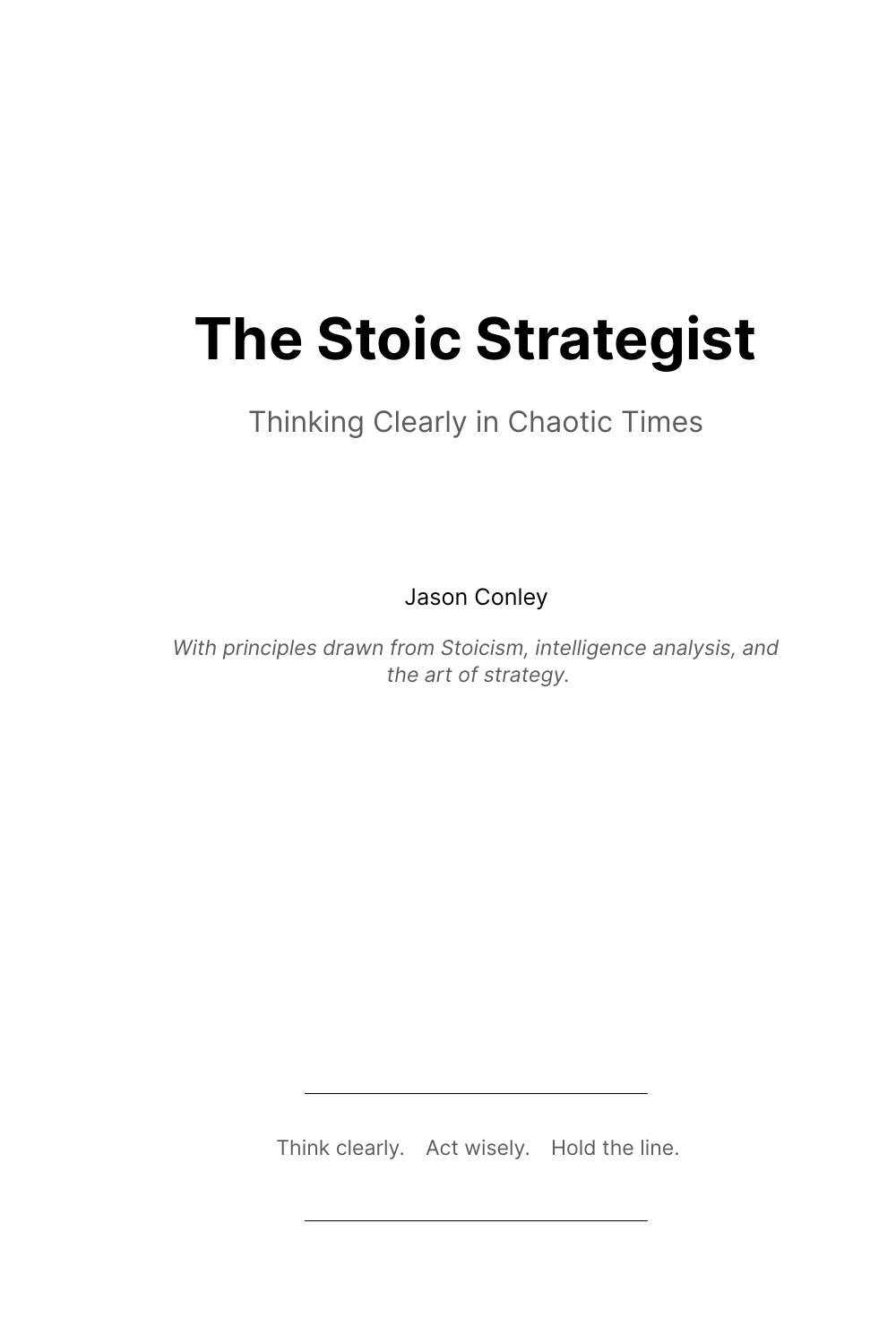
In my book, The Stoic Strategist: Thinking Clearly in Chaotic Times, I bring this analytical experience together with Stoic philosophy and strategic thinking. The examples and exercises give you a way to practise the reasoning yourself.
Think Clearly. Act Wisely. Hold the Line.
A repeatable approach
Give the decision a structure.
Pressure can make a quick answer feel more convincing than the evidence allows. Use a deliberate process to examine your reasoning before you commit.
01 / Steady your response
Keep the objective in view.
Notice when frustration, urgency, or a wish to end the discussion starts driving the choice. Return attention to what you can influence and what the decision needs to achieve.
02 / Examine the situation
Separate facts from assumptions.
Identify what you can verify and what remains uncertain. Compare realistic options, including the cost of waiting and the consequences for other people.
03 / Recommend and review
Decide what happens next.
Test the preferred option: is it Right, Smart, and Sustainable? Explain the next action, any required approval, and the evidence that would make you reconsider.
From the articles
Work through the difficult parts.
Start with a situation you recognize.
Incomplete information
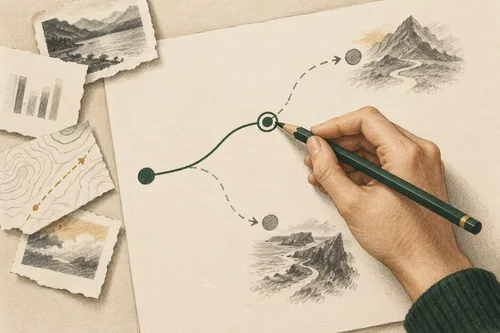
How to Decide Before Certainty Arrives
A five-part method for matching your action to the evidence and setting conditions for review.
Read the article →
Team decisions
When a Meeting Mistakes Closure for Clarity
Examine the difference between ending a discussion and reaching a clear decision.
Read the article →
Responding under pressure
The Angry Reply Usually Solves the Wrong Problem
Consider what a reply needs to achieve before frustration decides its tone.
Read the article →Start with the free resource
Use the method on your next decision.
Get the four-page Decision Brief: an introduction, a reusable blank brief, and the Overloaded Team case with its completed recommendation.
- Separate what you know from what you assume.
- Compare options and explain the tradeoff.
- Name your next step and what would make you reconsider.
Printable PDF. No purchase required. Download with or without subscribing to practical emails.

Further study and practice
The book and Decision Toolkit
Study the ideas in depth with the book, then practise with a 38-drill workbook, three worked examples, and reusable decision and review sheets.
Explore the complete Toolkit →Start with one decision
Put your recommendation on paper.
The free Decision Brief gives you a place to begin. Use the completed example when you need to see how the pieces fit.
You can download it with or without subscribing to emails.